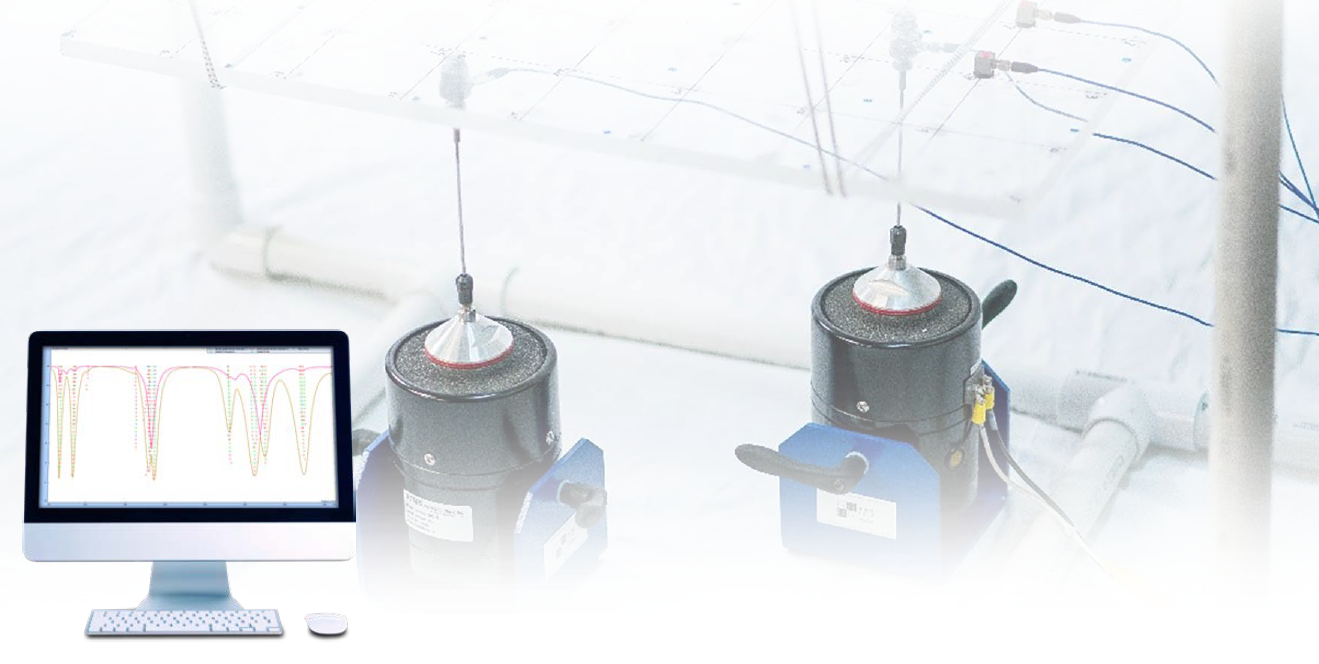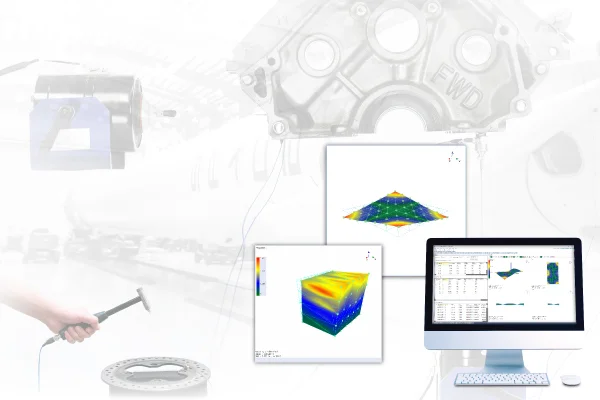
Could you explain the difference between time domain, frequency domain and modal space? I hear it all the time but I'm not sure what's the difference.
There's a lot to explain but let's start with something simple.
Read More
There's a lot to explain but let's start with something simple.
Read MoreCrystal Instruments’ partner AcSoft provided a helpful Automotive NVH Seminar on March 13, 2019 at the National Conference Center in Birmingham, UK. AcSoft is a valued partner and distributor of Crystal Instruments data acquisition solutions in the United Kingdom.
Read MoreAbstract
A poly-reference least-square method for modal parameter identification of a system in frequency-domain is discussed and implemented. It can also be considered as a multi-reference frequency-domain implementation of the recognized time-domain based Least-Squares Complex Exponential (LSCE) estimator. The main advantages of the Poly-reference Least-Squares Complex Frequency-domain estimator (p-LSCF) are its capabilities of handling high system orders and high modal density. The stability diagram is much cleaner which makes the selection of system poles easier. Other advantages are lower computational times and the ability to handle multiple references. The Poly-X is Crystal Instruments’ version of p-LSCF, which is included in the EDM Modal software package. A MIMO FRF experimental test is carried out to demonstrate these advantages.
Crystal Instruments (CI) is excited to announce Avenir Technologies FZE as our new distributor in the United Arab Emirates region. Avenir Technologies FZE is located in the UAE, with offices in Dubai and Abu Dhabi.
Read MoreJoin Crystal Instruments’ “Experimental Modal Measurement and Analysis Seminar” from May 6-7, 2019, in Montreal, Canada and from May 9-10, 2019, in Toronto, Canada. All are invited to attend.
Registration cost is $199, visit the following link to register: http://www.Swiftpage6.com/dalimar.dalimar/SurveyMODALSEMINAR2019/Survey.aspx
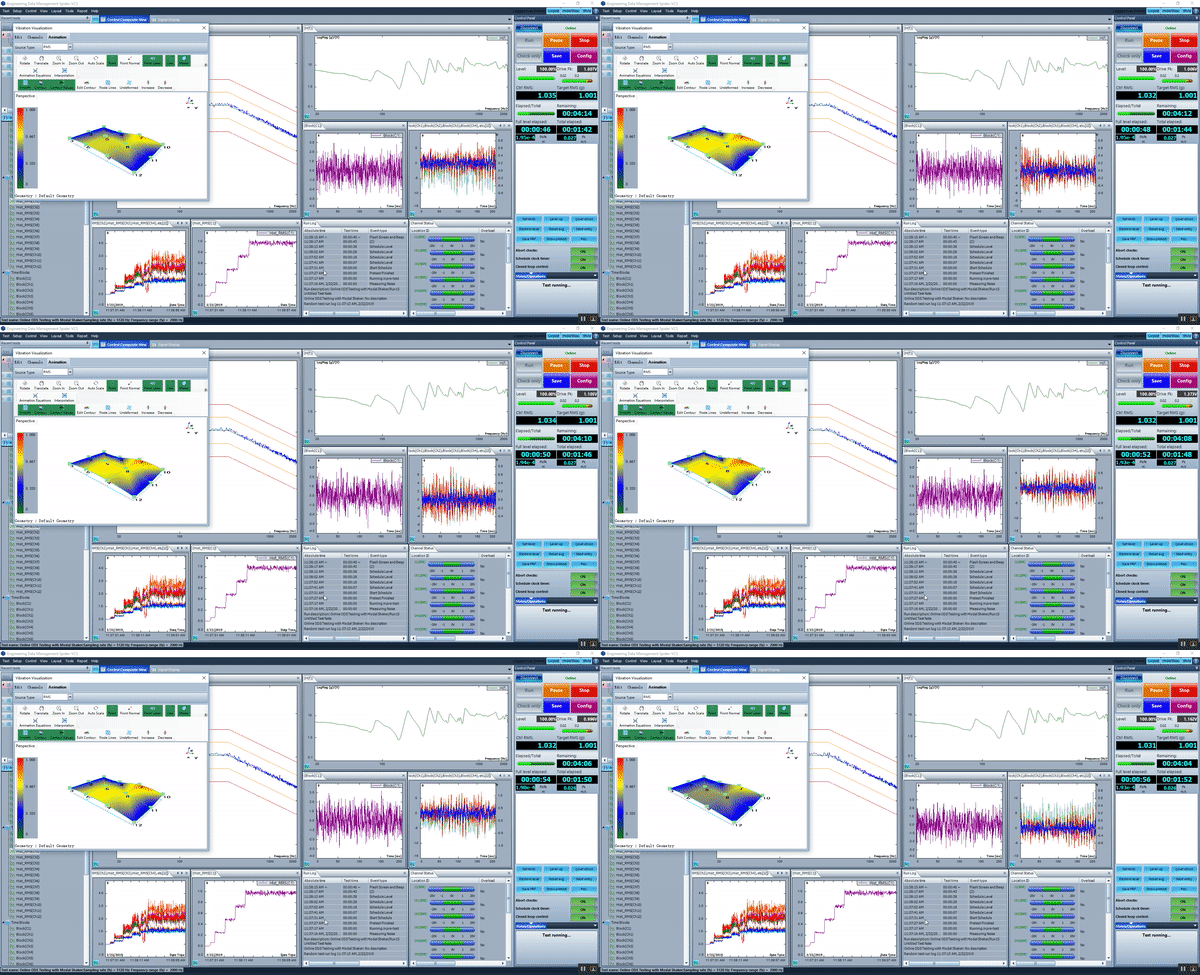
Read MoreThe EDM Vibration Visualization feature is available in all modules of EDM software (VCS, DSA and Modal). This option provides fast and efficient structural model generation and full 3D visualization of the online vibration pattern on the structure under test
Read MoreCrystal Instruments is pleased to announce the release of EDM 8.0, the most advanced featured version of Engineering Data Management software. This new release of EDM supports exciting new hardware systems, convenient new software features, and helpful online resources.
Read MoreThe Spider-80Xi platform gives users the immense flexibility to combine the Spider-80Xi, Spider-80SGi or Spider-80Ti devices into one system with synchronized data acquisition. The Spider-80SG and Spider-80SGi can work as general-purpose data acquisition systems that not only supports strain measurement but also supports several sensor types requiring precision excitation voltage, including MEMS and strain gage based sensors. The Spider-80Ti on the other hand can acquire temperature data along with any other type of measurement quantity by using it with any combination of Spider-80Xs and Spider-80SGs.
Read MoreThe Ethernet connection interface is one of the most important features of the 4th generation Spider series vibration controller. It provides the flexibility of location, reduces noise and electrical interference, and uses one PC to monitor multiple controllers.
Read MoreThe future is here! Crystal Instruments’ newly released EDM Cloud service and enhancements to the online CI Store launch us into the current century and beyond; no end in sight to our innovative spirit.
Read MoreThe CoCo-80X’s latest software release includes a new signal analysis project for Sound Power applications. The Sound Power CSA features a graphic interface to show the test point status. There are multiple test room types and microphone arrangements. When the test is complete, a report is generated.
Read MoreThe 4th annual SmallSat Symposium returns to the Silicon Valley Computer History Museum for 2019. Crystal Instruments and Sentek Dynamics had the privilege to exhibit products and solutions for the small satellites industry.
Read MoreCrystal Instruments is currently working on the latest and most advanced featured version of EDM 8.0. The following is a brief preview of what can be expected from the EDM 8.0 Version release:
Read MoreCrystal Instruments exhibited a highly advanced new set of tools called “EDM Modal”, at IMAC 2019 in Orlando, Florida. IMAC XXXVII maintained a broader focus and chose this year’s theme as “Predictive Modeling for Engineering Design and Decision Making.” The conference took on a note of focusing more on general-purpose data acquisition while still maintaining a strong academic focus on the principles of modal analysis.
Read MoreCrystal Instruments will be hosting an “Experimental Modal Measurement and Analysis Seminar” from February 26 - 27, 2019, at the Biltmore Hotel in Santa Clara, CA. All are invited to attend. Registration cost is $199, click here to register.
Read More